
Best Time to Start Sculptra: Why Starting Early Pays Off
Summary
The best time to start Sculptra is when your collagen is still declining slowly rather than after significant volume has already been lost, which for most people falls in the late 20s through the 30s. Because Sculptra rebuilds your own collagen gradually over several months, starting earlier means you are preserving a strong foundation instead of trying to reconstruct one later. Below, we explain the timing, share a younger patient before and after, and walk through what a first Sculptra series actually looks like at Boston Beautox in South Boston.
- Sculptra is a poly-L-lactic acid biostimulator that prompts your body to build new collagen over time, not an instant filler.
- Collagen production begins declining around age 25 at roughly one percent per year, so early intervention preserves more of your natural structure.
- Starting Sculptra earlier generally means fewer vials over a lifetime and more subtle, natural-looking maintenance.
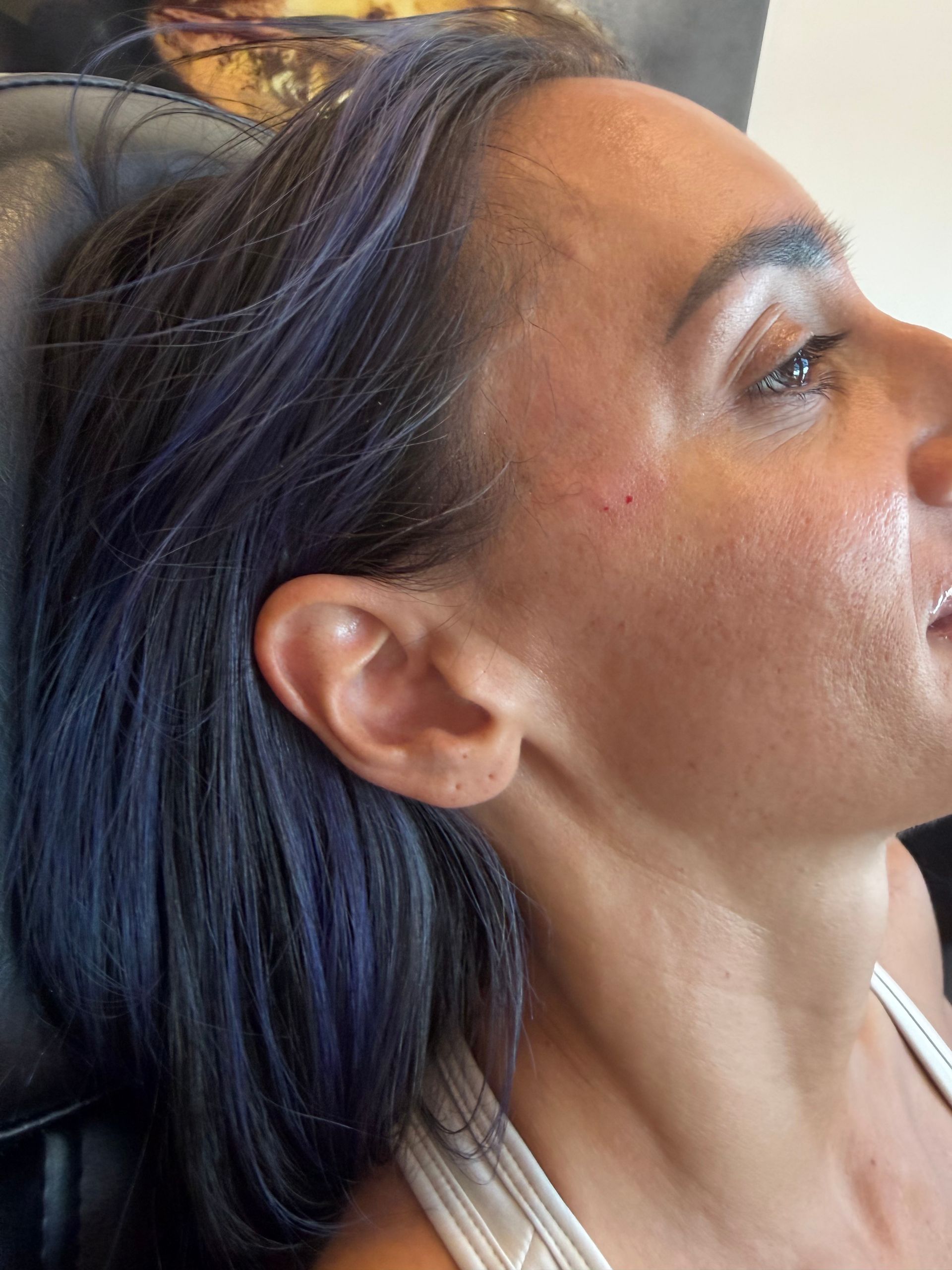
- A younger patient can see meaningful improvement in skin firmness and mid-face support without looking overdone.
- The right time is individual, and a consultation with David Gomes, PA, at Boston Beautox is the best way to know if you are a candidate.
Why Timing Is the Real Question With Sculptra
Most people do not ask whether Sculptra works. They ask when they should begin. That is the smarter question, because Sculptra rewards good timing more than almost any other aesthetic treatment we offer.
Here is the reason. A traditional filler adds volume the moment it goes in, so its timing is flexible. You can place it the week before an event and see the result. Sculptra behaves differently. It works by signaling your own body to produce fresh collagen, and that process unfolds over the weeks and months following each session. In other words, Sculptra is less like filling a pothole and more like planting a garden. The earlier you plant, the more you have to enjoy later.
When you begin while your skin still has a healthy collagen reserve, Sculptra helps you hold onto what you already have. When you wait until volume loss is advanced, you are asking the treatment to rebuild from a lower starting point, which usually takes more product and more time.
What Happens to Collagen in Your Late 20s and 30s
Collagen is the protein scaffold that keeps skin firm, smooth, and supported. Starting around age 25, natural collagen production slows by roughly one percent each year. In your late 20s and early 30s this loss is quiet. You might notice that your skin looks a little flatter after a stressful week, that makeup settles into areas it never used to, or that your face looks tired even when you are rested.
These early signals are the ideal window. The structural loss is still modest, so a series of Sculptra treatments can reinforce the foundation before hollowing becomes visible in the temples, cheeks, or under the eyes. City life adds to the equation. Sun exposure during summers on the Cape, disrupted sleep, and everyday environmental stress in Boston all accelerate collagen breakdown, which is exactly why proactive support makes sense for younger patients here.
What Starting Early Actually Looks Like
The patients who benefit most from early Sculptra usually are not the ones with obvious concerns. They are the ones who look in the mirror and sense that something is slightly off, even though they cannot point to a single wrinkle. Maybe the cheeks look a touch flatter than they did a couple of years ago, or the face reads as tired at the end of a long week no matter how much sleep they get. There are no deep lines to correct and no dramatic hollowing to fill. That is exactly the point.
When Sculptra is used at this stage, the goal is preservation rather than reconstruction. Because there is still a healthy collagen base to build on, a conservative amount of product goes a long way. The result is quiet and cumulative. Skin looks firmer and better supported, the mid-face keeps its natural fullness, and nothing about the outcome announces that a treatment happened. This is the advantage of starting before volume loss becomes visible. You are reinforcing a strong foundation instead of trying to rebuild one after it has already weakened, which keeps the results subtle, natural, and easy to maintain over time.
The Compounding Payoff of Starting Early
Think of Sculptra the way you would think of any long-term investment. Small, consistent deposits made early tend to outperform a large scramble to catch up later.
Patients who begin in their late 20s or 30s often need less product per session and can space maintenance further apart over time, because they are topping up a foundation rather than rebuilding one. Patients who wait until their 40s or 50s, when a larger share of collagen is already gone, frequently require a more involved series to reach the same place. Starting early also keeps results in that subtle, undetectable zone that ages gracefully, which fits the longevity-focused philosophy we bring to every treatment plan.
It is worth clearing up one common worry. Starting Sculptra young does not lock you into endless treatment. If you ever pause, your skin simply resumes its natural aging from wherever you left off. You stay ahead of where you would have been, because the collagen you built does not disappear the moment you stop.
What a First Sculptra Series Actually Looks Like
For younger patients, Sculptra is usually delivered as a short series of sessions spaced several weeks apart, with the exact number tailored to your skin and goals. David Gomes, PA, places the product deep in the dermis, where it works with your tissue to stimulate new collagen.
You will not walk out with a dramatic change, and that is by design. Results build gradually, typically becoming noticeable around the three month mark and continuing to refine from there. Downtime is minimal, and mild swelling or tenderness usually settles quickly. Because the effect develops slowly, people tend to notice you look refreshed without being able to say why, which is exactly the result most younger patients want.
Combining Sculptra with Other Aesthetic Treatments
Sculptra rarely does its best work in isolation. At Boston Beautox, it tends to shine as one part of a coordinated plan, and that is especially true for patients moving through the weight loss program, where a combination of treatments usually serves the face and body better than any single procedure on its own.
One of the most natural partners is Morpheus8 radiofrequency microneedling. The two treatments work from opposite directions. Sculptra rebuilds volume deep in the dermis by prompting new collagen, while Morpheus8 delivers fractional RF energy through fine microneedles to remodel collagen and firm the skin closer to the surface. Because rapid or significant weight loss often leaves behind both lost structural volume and loose surface skin, pairing the two covers concerns that neither could fully resolve alone. The outcome is more complete than either treatment delivers on its own.
Body composition tracking rounds out the picture. A Caliper Consultation, also available at Boston Beautox, gives weight loss patients a clearer read on lean mass versus fat loss than the scale alone can offer. As those numbers shift and the body changes, the aesthetic plan can be adjusted in step, so the facial work keeps pace with the progress happening everywhere else.
Is It Too Early or Too Late for You?
You may be a strong candidate for early Sculptra if you are in your late 20s or 30s, your skin is starting to look flatter or more tired than it used to, and you want to protect your foundation rather than chase a dramatic change. You are also a good fit if you prefer results that build naturally over time instead of an instant plump.
Sculptra can absolutely still help if you are older or further along in volume loss. It simply tends to require a more comprehensive plan. The honest answer is that the right timing depends on your genetics, lifestyle, and how your face is aging, which is why a professional assessment matters more than a number on a calendar.
Book Your Sculptra Consultation in South Boston
The best time to start Sculptra is before you feel you truly need it, when there is still a strong foundation to protect. If you are noticing the first quiet signs of collagen loss and want a natural, long-term plan, we would love to talk.
Schedule your consultation with David Gomes, PA, at Boston Beautox. Visit BostonBeautox.com or call 857-496-0423 to find out if early Sculptra is right for you.
Frequently Asked Questions
What is the best age to start Sculptra?
For most people the ideal window is the late 20s through the 30s, when collagen has begun to decline but significant volume loss has not yet occurred. Starting in this window helps preserve your existing foundation and usually keeps results subtle and natural.
Can you start Sculptra in your 20s?
Yes. Many patients in their late 20s begin Sculptra as a preventative step to maintain skin firmness and mid-face support. Because there is still abundant natural collagen at that age, a conservative amount of product often produces a natural, undetectable result.
Is Sculptra better than filler for younger patients?
They do different jobs. Filler adds instant volume to a specific area, while Sculptra gradually rebuilds your own collagen across a broader region. Many younger patients prefer Sculptra because the results look natural and improve skin quality over time rather than adding obvious volume.
How long does it take to see Sculptra results?
Results develop gradually, with most patients noticing changes around three months after treatment as new collagen forms. The effect continues to refine over the following months, which is why Sculptra is considered a long-game treatment.
Do you have to keep getting Sculptra forever once you start?
No. If you stop, your skin simply resumes its natural aging process from that point. You remain ahead of where you would have been, because the collagen you built does not vanish when you pause treatment.
How long do Sculptra results last?
Once a full series is complete, results can last two years or more, since the improvement comes from your own newly produced collagen. Periodic maintenance sessions help sustain and extend the effect over time.